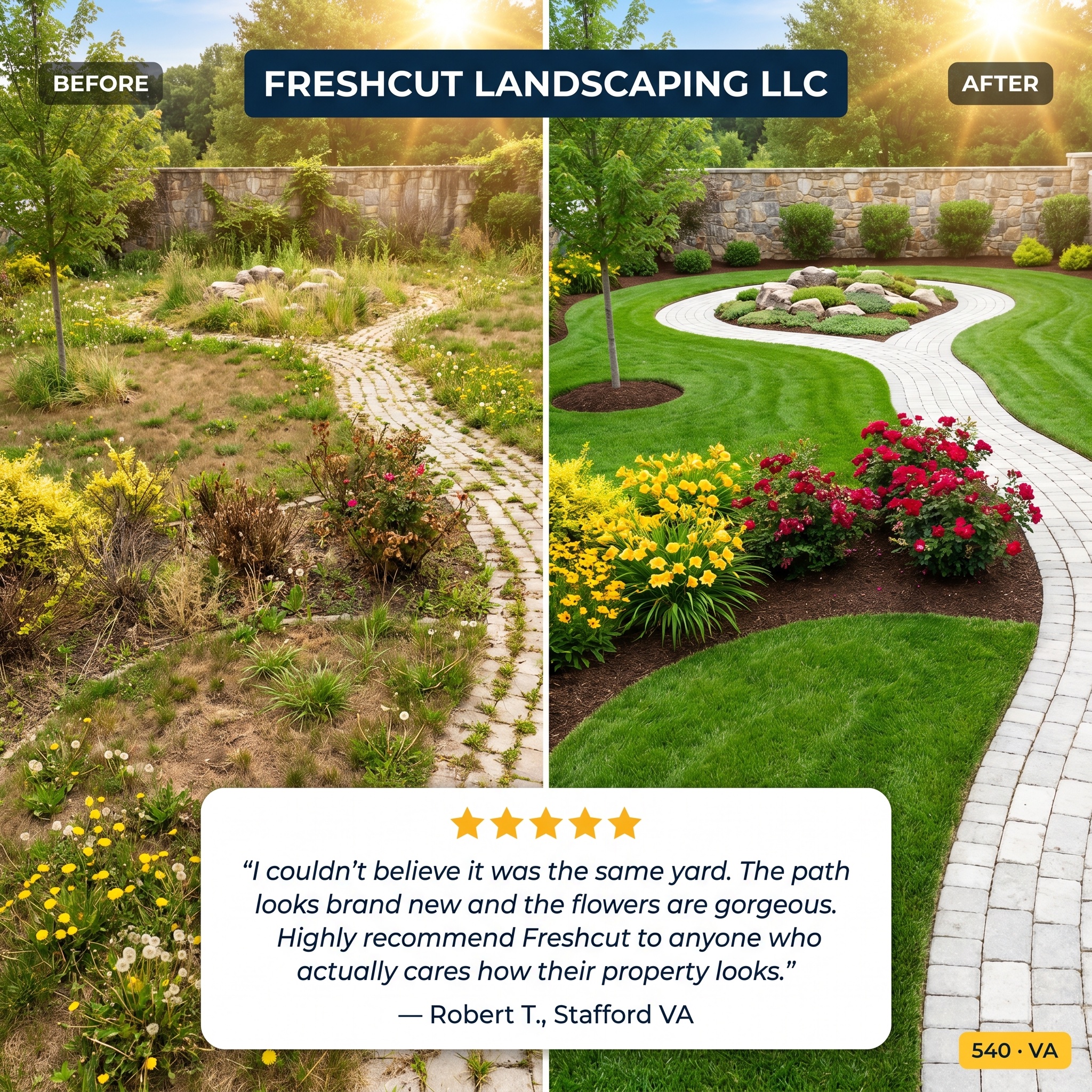
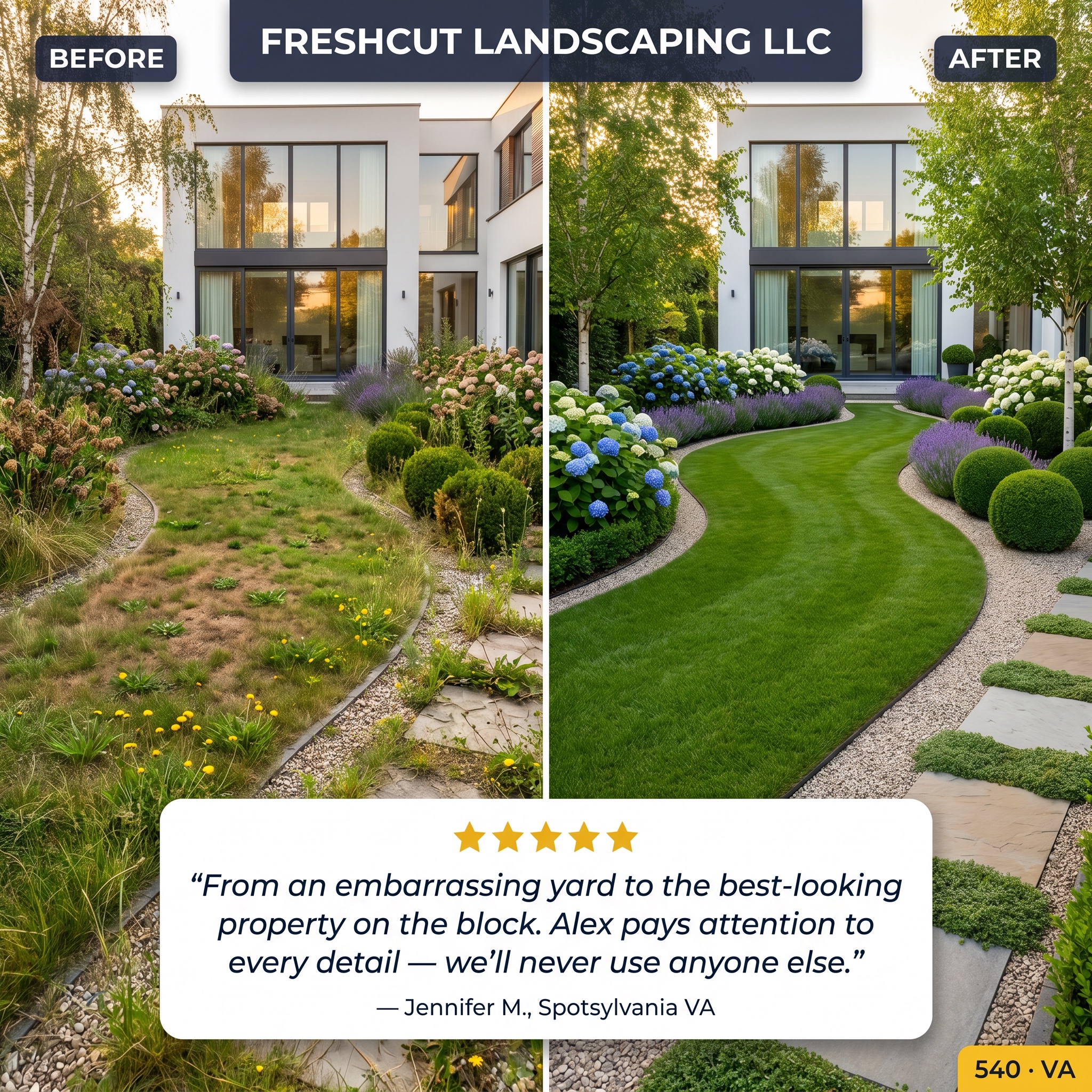
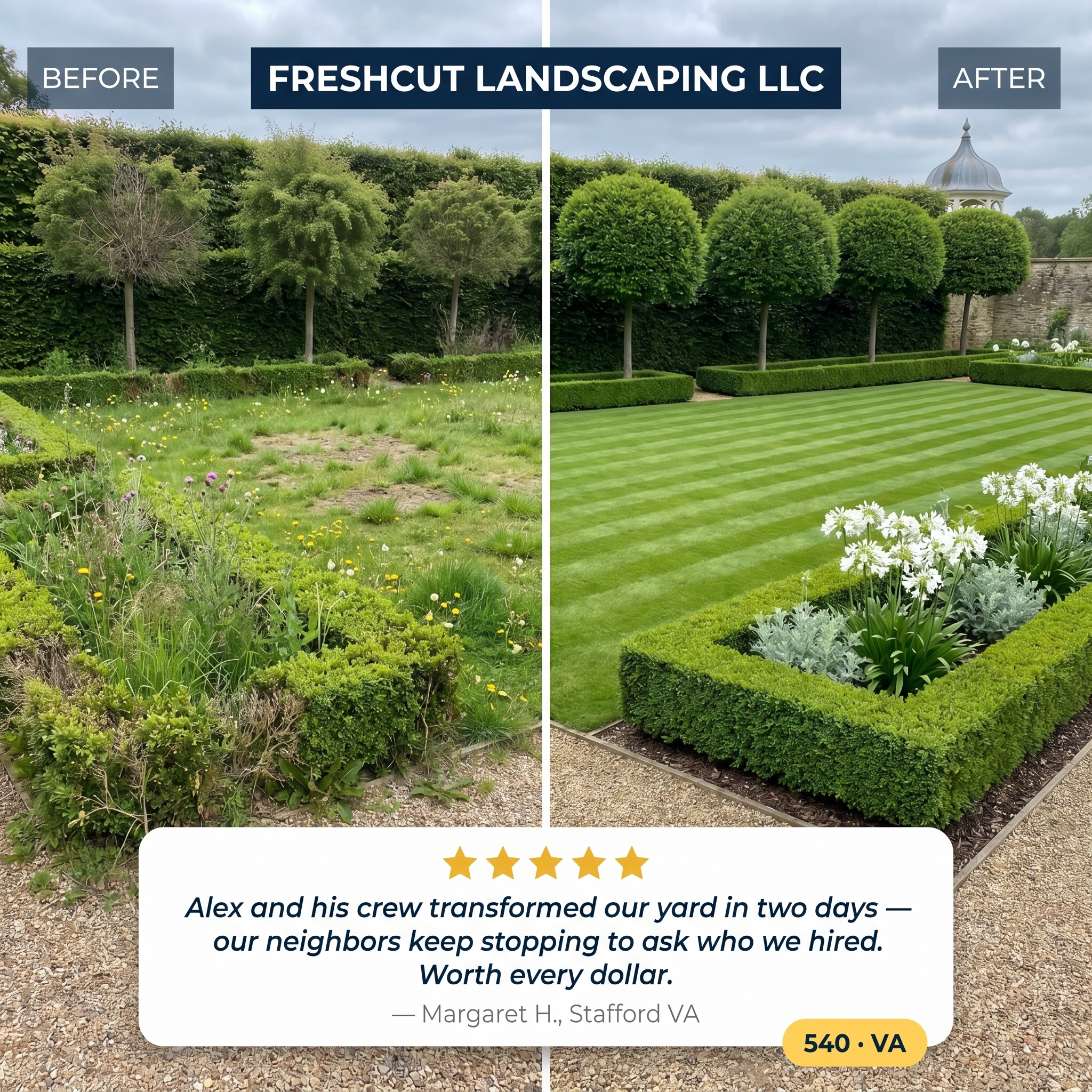
Walk through any neighborhood in Stafford or Spotsylvania and you'll see lawns ranging from lush, green carpets to patchy, struggling messes — and the difference often comes down to one simple thing: the wrong grass type. Virginia's climate doesn't play nice with every grass variety. Choosing the right one from the start saves you years of frustration and hundreds of dollars in remediation. Here's what actually works in the 540 area.
Virginia's Grass-Growing Zone
The 540 area — Stafford, Fredericksburg, Spotsylvania, and King George — sits squarely in what turf scientists call the transition zone. This is one of the most challenging regions in the country to grow grass because you get the worst of both worlds: summers that are too hot and humid for cool-season grasses to thrive, and winters that are too cold for warm-season grasses to stay green year-round.
That transition zone reality is why you'll see more brown, dormant grass in this area during summer than you might expect. It's not always neglect — it's sometimes just physics. The key is choosing grass varieties that are specifically bred to handle both extremes, or accepting a lawn that goes dormant in summer and managing it accordingly.
Virginia's clay-heavy soil also plays a role. It compacts easily, drains poorly when poorly managed, and creates conditions where certain grass types root shallowly and struggle during dry spells. Understanding both your climate zone and your soil type is step one.
Cool-Season Grasses for Virginia
Cool-season grasses grow actively in spring and fall when temperatures are between 60–75°F, go semi-dormant in summer heat, and green back up in early September. They're the dominant grass type in the 540 area because our winters are mild enough to keep them alive year-round.
Tall Fescue — The #1 Choice for the 540 Area
Tall Fescue is the most forgiving, adaptable grass for Fredericksburg and Stafford homeowners. It tolerates Virginia's summer heat better than any other cool-season grass, develops deep roots that handle drought better than Kentucky Bluegrass or fine fescues, and performs well in both full sun and partial shade. Modern turf-type tall fescue varieties (like Rebel, Falcon, and Bravado) have been specifically developed for the transition zone. This is the grass most local landscapers recommend first.
Kentucky Bluegrass — Beautiful but Demanding
Kentucky Bluegrass produces a dense, lush, blue-green lawn that's hard to match aesthetically. The problem is that in the 540 area's summer heat and humidity, it tends to go into heavy dormancy and struggles to recover. It also requires more irrigation, more fertilization, and is susceptible to summer patch disease in Virginia's humid conditions. We don't recommend it as a standalone grass for this area, though some homeowners blend it with Tall Fescue with decent results.
Fine Fescue — Best for Shade
Creeping Red Fescue and Hard Fescue are excellent choices for shaded areas under the oaks and maples common throughout the 540 area. They're low-maintenance, low-water, and stay green in shade where Tall Fescue thins out. Not a great choice for sunny, high-traffic areas — they don't handle foot traffic or summer stress as well.
Ready for a flawless yard? Call Alex at 540-455-7405 for a free estimate.
Call NowWarm-Season Options
Warm-season grasses grow vigorously in Virginia summers but go completely dormant and turn brown in winter. They're most common in the southeastern part of Virginia, but some varieties work in the 540 area for homeowners who prefer a drought-tolerant, low-summer-maintenance lawn and don't mind a brown dormant period from November through March.
Zoysia — The Best Warm-Season Option for Our Area
Zoysia grass is the warm-season variety most likely to survive and perform well in the 540 area. It's slower to establish than Bermuda but more cold-hardy, making it a realistic option for full-sun Stafford and Spotsylvania lawns. Once established, it's extremely drought-tolerant, chokes out weeds with its dense growth, and handles Virginia summers beautifully. The trade-off is a 4–6 month dormant, brown period each winter.
Bermuda — Sun-Only, Hot Weather Champion
Bermuda grass is one of the most heat and drought-tolerant grasses available, and it can work in the very southern parts of our service area. However, it's at the northern edge of its range in Fredericksburg and goes dormant for a longer period than Zoysia. It also needs full sun — any shade and it thins out badly. If you have a fully sunny yard and want extremely low summer maintenance, it's worth discussing.
Which Grass Is Right for Your Yard?
For the vast majority of 540 area homeowners, Turf-Type Tall Fescue is the answer. It handles our summers, survives our winters, tolerates our clay soil, and performs reasonably well in shade. If you have heavy shade from mature trees, add a Fine Fescue blend to those areas. If you have a fully sunny yard and want a warm-season lawn, Zoysia is worth considering — just understand the dormancy window.
- Full sun, accepts some dormancy: Zoysia or Bermuda (warm-season)
- Full sun, want year-round green: Turf-Type Tall Fescue
- Partial shade: Tall Fescue blend with Fine Fescue
- Heavy shade: Fine Fescue dominant mix
- High traffic areas: Tall Fescue (most durable cool-season option)
Seeding vs. Sodding in Virginia
Once you've chosen the right grass type, the next decision is whether to seed or sod. Both have a place in the 540 area — here's how to think through it:
Seeding
For cool-season grasses like Tall Fescue, the ideal seeding window in Virginia is September through mid-October. Soil temperatures are still warm enough for germination, but air temperatures have dropped enough that seedlings won't cook before they establish. Spring seeding (March–April) works but is less reliable because summer heat arrives before the turf fully matures. Seeding is more affordable than sodding and allows you to select specific varieties, but takes 6–8 weeks to achieve coverage and requires protection from foot traffic.
Sodding
Sod gives you an instant lawn and can be installed any time soil temperatures are above 50°F — roughly March through October in the 540 area. It's more expensive but establishes quickly, controls erosion immediately, and reduces the window during which weeds can establish. If you're sodding a slope, replacing a damaged area, or need results fast before selling a home, sod is often the better call.
Get Expert Advice for Your Specific Yard
Every property in the 540 area is different. Alex can assess your soil, shade, and current grass situation and recommend exactly what will work.
Get Your Free Estimate Today →