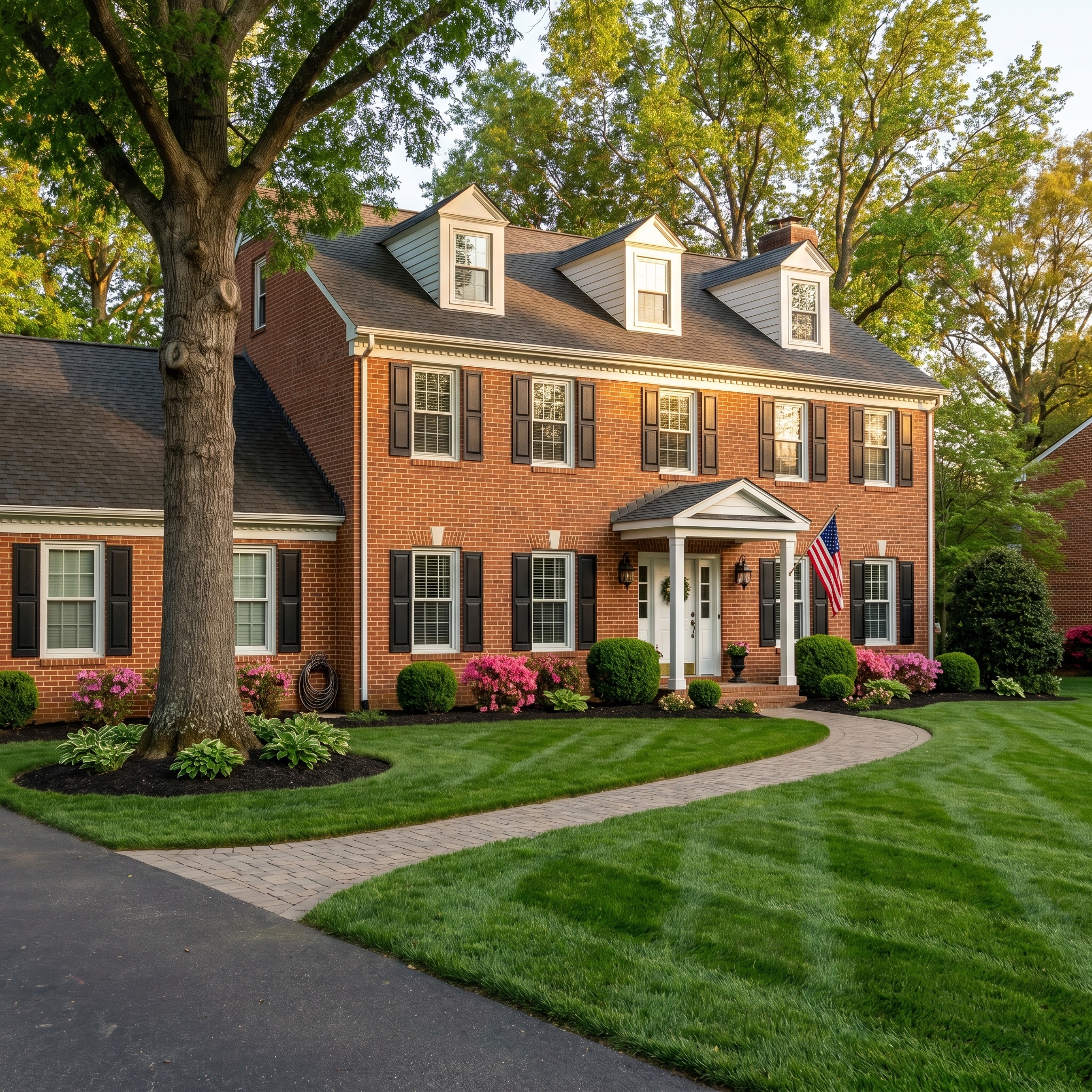
Spring in the 540 area moves fast. One week you've got frozen ground and dead-looking grass, and three weeks later the weeds are already winning. If you're a homeowner in Stafford, Fredericksburg, or Spotsylvania, the window between late February and late May is the most important stretch of the entire year for your lawn. What you do — or don't do — in these three months determines whether you have a lush yard through July or spend summer chasing problems.
This is the exact checklist we use when bringing yards back to life across the 540 area each spring.
Why Spring Is Critical for Virginia Lawns
Virginia's transition zone climate means cool-season grasses like Tall Fescue come out of winter in a weakened state. The roots are shallow from cold-season dormancy, the soil is compacted from rain and freeze-thaw cycles, and thatch may have built up over the winter. Meanwhile, crabgrass and other annual weeds are waiting for soil temperatures to hit 55°F — at which point they explode if you haven't applied pre-emergent herbicide.
The good news is that spring in the 540 area also gives you ideal growing conditions — moderate temperatures, natural rainfall, and long days. If you do the right things at the right times, your turf will thicken up and build enough root depth to handle the Virginia summer heat better than a neglected lawn ever could.
March: Wake Up Your Yard
March in Fredericksburg and Stafford is unpredictable — we can get warm days in the 60s one week and frost the next. The goal in March is prep and prevention, not aggressive growth work.
March Priority Tasks
- Apply pre-emergent herbicide when soil temps reach 50–55°F (typically early-to-mid March in the 540 area) — this is the most time-sensitive task of the entire spring
- Rake out any matted areas from winter snow and ice — matted grass can develop snow mold that spreads as temps warm
- Dethatch if thatch layer is more than half an inch thick — a thatch rake or power dethatcher works; don't do this if grass is still dormant
- Get your mower serviced — fresh blades, oil change, spark plug check before first mow of the season
- Check irrigation heads and reset your watering schedule for spring (shorter, infrequent cycles)
- Assess your lawn for thin or bare patches — note them now so you can overseed in April after pre-emergent window passes
Timing matters on pre-emergent: If you apply it too early, it breaks down before crabgrass germinates. Too late and the crabgrass is already up. In the 540 area, watch for forsythia to bloom — that's a reliable biological indicator that soil temps are in the pre-emergent window.
April: Feeding and Fixing
April is when the real work begins. Temperatures are consistent, grass is actively growing, and this is your best opportunity to feed, fix, and set the lawn up for success before summer heat arrives.
April Priority Tasks
- Fertilize with a slow-release nitrogen fertilizer — apply 0.5 to 1 lb of nitrogen per 1,000 sq ft for cool-season turf; avoid quick-release nitrogen in early spring
- Aerate if you didn't do a fall aeration — Virginia's clay soil compacts heavily; core aeration opens the soil and lets water and nutrients penetrate
- Overseed thin or bare patches — wait until your pre-emergent window has closed (usually mid-to-late April) before seeding; new seed won't germinate well with pre-emergent in the soil
- Apply fresh mulch to all plant beds — 2 to 3 inches deep, pulled 2 inches back from plant stems and tree trunks
- Edge all bed lines and turf borders — clean edges make the entire property look more maintained
- Lime application if soil pH is below 6.0 — Virginia's clay soil tends to run acidic; lime raises pH and unlocks nutrients that are tied up in acidic soil
- Begin mowing once grass reaches 4 inches; first cut should be at 3.5 inches — never cut more than one-third of the blade at once
Ready for a flawless yard? Call Alex at 540-455-7405 for a free estimate.
Call NowMay: Maintain and Protect
By May, your lawn should be actively growing and filling in. The focus shifts to maintenance and building toughness before summer heat hits. Virginia can see temperatures climbing toward 85–90°F by late May, so this is the month to get your turf as healthy as possible before the heat stress window begins.
May Priority Tasks
- Mow at 3.5 to 4 inches — taller grass shades the soil, retains more moisture, and produces deeper roots; this is one of the single most impactful things you can do for summer survival
- Establish a watering schedule — 1 inch of water per week, applied in 1–2 deep sessions rather than daily shallow watering
- Watch for grub activity — early May is when Japanese beetle larvae are near the surface; if you had grub damage last fall, consider a preventive grub control treatment
- Apply post-emergent weed control for any broadleaf weeds (dandelion, clover, ground ivy) that escaped the pre-emergent in March
- Check mulch beds and refresh any areas where winter rain washed away coverage
- Schedule a gutter cleaning if trees have been dropping seeds and pollen (common with oaks and maples in the 540 area)
Common Spring Mistakes Virginia Homeowners Make
Knowing what to do matters. But knowing what not to do is equally important. These are the spring mistakes we see every year across Stafford, Fredericksburg, and Spotsylvania:
- Applying pre-emergent too late — even two weeks late can mean a full summer of crabgrass fighting
- Fertilizing too early — fertilizing while grass is still semi-dormant pushes tender growth that burns when frost returns
- Mowing too short — scalping the lawn in spring removes carbohydrate reserves the plant needs to recover from winter
- Skipping aeration — Virginia's clay soil compacts every winter; without aeration, water and nutrients can't reach root zones
- Watering daily instead of deeply — shallow, frequent watering keeps roots near the surface where they're vulnerable to summer heat
- Volcano mulching — piling mulch against tree trunks traps moisture and causes rot; keep mulch away from the base
Want a Professional Spring Cleanup?
Alex handles spring cleanups, mulching, edging, and lawn care across the entire 540 area. Free estimates, honest pricing.
Get Your Free Estimate Today →