Fall in the 540 area is deceptive. The weather is comfortable, the yard still looks green, and it's tempting to think the growing season is winding down on its own. It isn't. What you do to your lawn and landscape between late September and the first hard freeze decides how your property looks next spring. Skip it, and you're starting April behind: matted grass, bare patches, clogged gutters, and beds that took winter damage you could have prevented.
Fredericksburg, Stafford, and Spotsylvania sit in a transition zone where cool-season grasses like Tall Fescue dominate. That single fact changes everything about fall care. Unlike the warm-season lawns further south, fescue does its most important root growth in fall, not summer. Fall is when you feed it, seed it, and set it up to survive winter dormancy. This checklist walks through every task in the order it should happen, with timing tuned to our specific climate.
Why Fall Cleanup Is Critical in the 540 Area
Three things make fall cleanup non-negotiable here, and they all come down to what grows in this region.
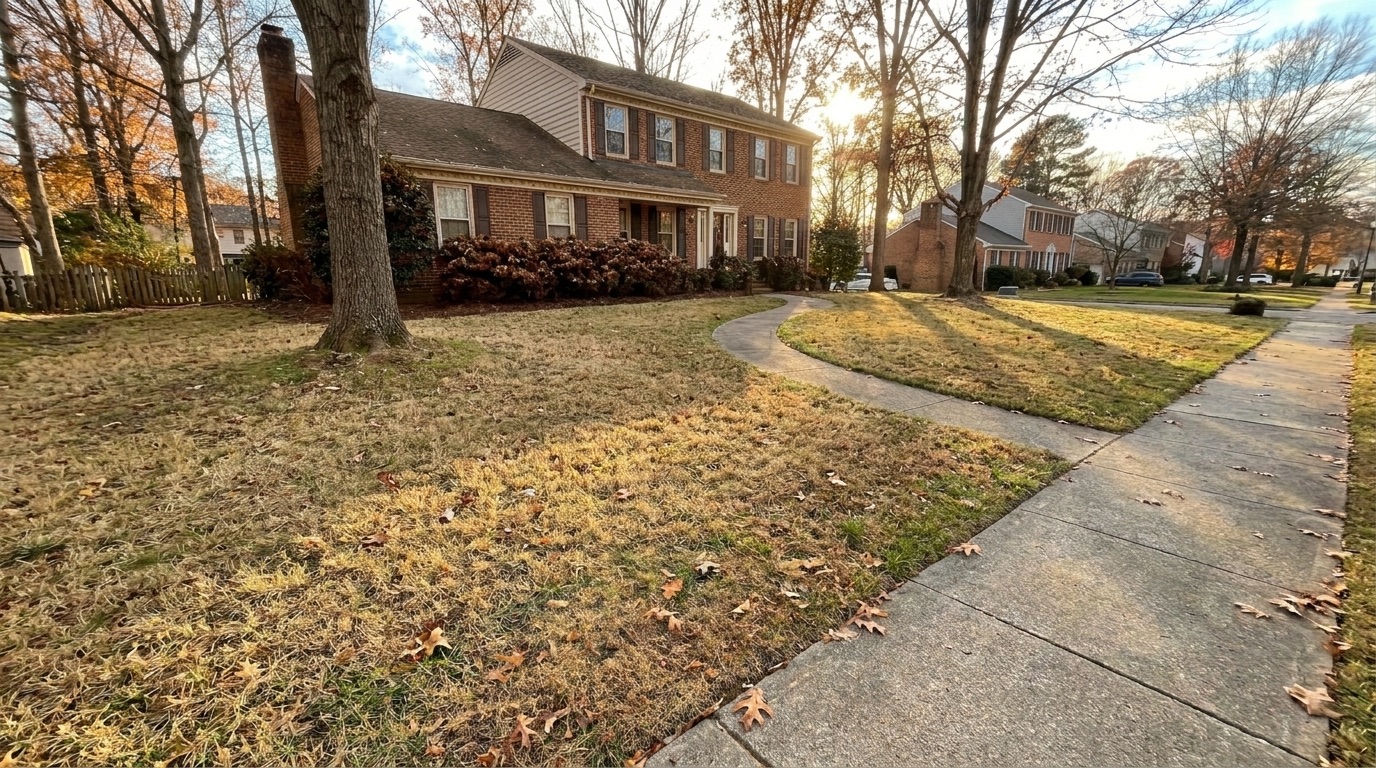
First, the leaf volume. The Fredericksburg area is heavy with mature hardwoods. Oaks, red and sugar maples, and sweetgums drop an enormous amount of material over a six to eight week stretch. Sweetgums add their spiky gumballs on top of the leaves. A single mature oak can shed enough leaves to bury a section of lawn under several inches of debris. Left in place, that layer blocks sunlight, traps moisture against the grass crowns, and creates the perfect conditions for snow mold and fungal disease over winter.
Second, the grass itself. Tall Fescue is a cool-season grass, which means fall is its peak growth window for roots, not just blades. The soil is still warm from summer, the air is cooler, and rainfall is more reliable. This is the one time of year the grass will aggressively repair thin spots and build the deep root system it needs to push through next summer's heat. If leaves smother it during this window, you lose the single most productive month of the entire year.
Third, winter dormancy. Everything you do in fall is preparation for the grass and plants going dormant. A lawn that heads into winter clean, fed, and cut to the right height comes out of dormancy fast and green. A lawn buried under wet leaves and stressed by neglect comes out patchy, thin, and vulnerable to weeds that fill the gaps in early spring.
The Complete Fall Cleanup Checklist
Work through these in order. Some are time-sensitive and have to land inside a specific window. Others can happen anytime once the leaves are down. Where timing matters, it's called out.
1. Clear All Leaves
Timing is the trap most homeowners fall into. Rake or blow too early and you're back out there every weekend as more leaves drop. Wait too long and the bottom layer mats down, kills the grass beneath it, and gets soaked into a heavy mess that's twice the work. In Fredericksburg, the sweet spot is after roughly 80 percent of the leaves have fallen, which usually lands in mid-November for most hardwood-heavy properties. Do one or two light passes during peak drop if the coverage gets thick, then a full cleanup once the canopy is nearly bare. A thin scattering of leaves can be mulched into the lawn with a mower, but a thick blanket has to come off completely.
2. Clean the Gutters
Leaves don't just land on the lawn. They pile into gutters, and in a region with this many hardwoods, they pack solid fast. Clogged gutters overflow during fall rains, sending water down your foundation instead of away from it. Worse, when the first cold snap hits, standing water in blocked gutters freezes and forms ice dams that can pull gutters off the fascia and force water back under your roofline. Clean the gutters after the leaves are down but before the first hard freeze. This is one task worth handling every fall without exception.
3. Final Mow and Height Adjustment
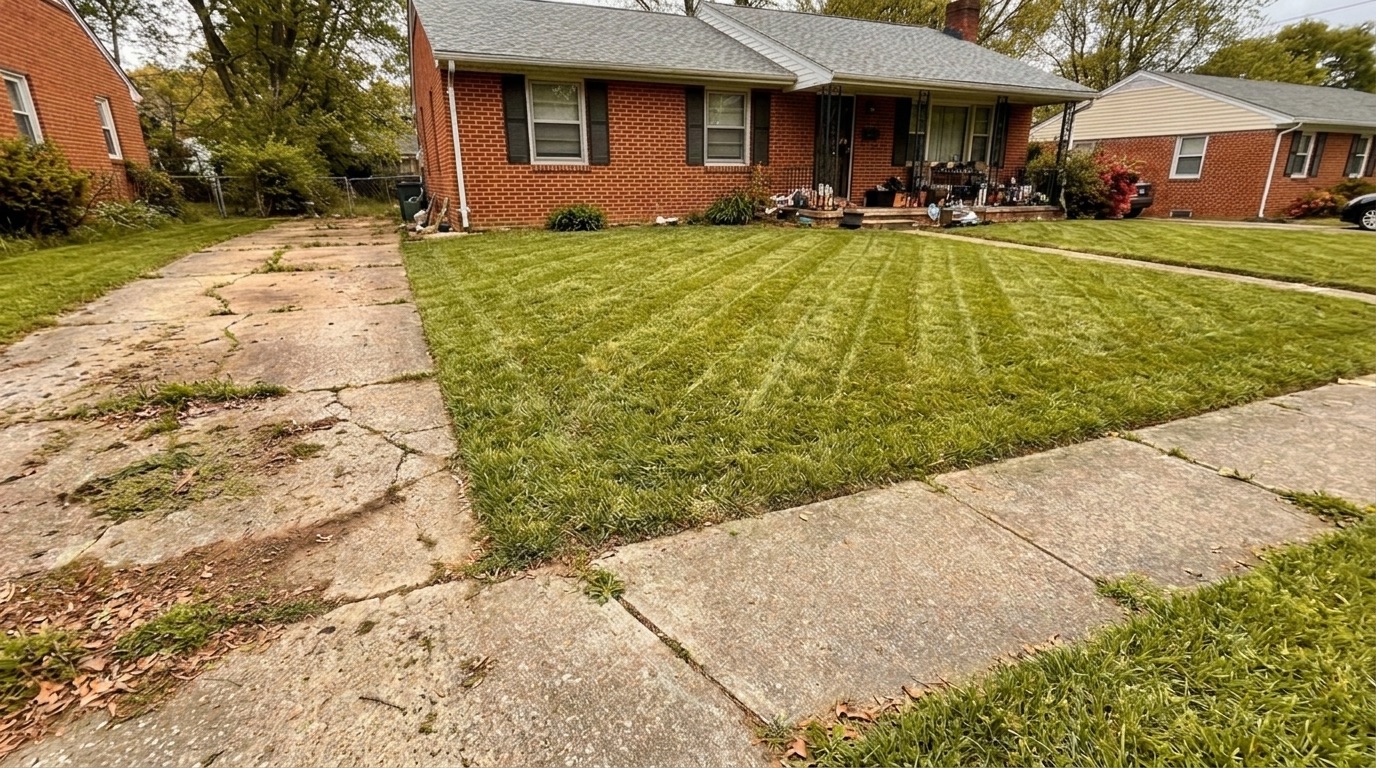
Your last mow of the season should not be your summer height. Through summer, Tall Fescue should be kept tall, around 4 inches, to shade the soil and hold moisture. Heading into winter, drop it slightly to a final height of 3.5 to 4 inches. That's tall enough to protect the crown and feed the roots, but not so tall that long blades fold over, mat down under snow, and invite snow mold. Never scalp a fescue lawn going into winter. Cutting it short exposes the crown to cold damage and gives weeds an open door in spring. Make the final cut before the grass stops growing, typically late November.
4. Overseed Bare Spots
This is the most time-sensitive task on the list, and it comes with a hard deadline. The cool-season seeding window in Virginia runs from early September through mid-October. Seed inside that window and the warm soil plus cooler air gives new fescue time to germinate and establish roots before the ground gets cold. Seed after mid-October and germination slows to a crawl, leaving tender seedlings that won't survive their first freeze. If your lawn has thin or bare patches, this is the moment to fix them. Miss the window and you're waiting until next fall for another real shot, because spring seeding gets crushed by summer heat before the roots are deep enough.
Not sure your yard is ready for winter? Call Alex at 540-455-7405 for a free fall cleanup estimate.
Call Now5. Apply Fall Fertilizer
Fall is the single most important feeding of the year for a cool-season lawn, and most homeowners skip it. Use a slow-release nitrogen fertilizer applied in fall, ideally around late October to early November for Virginia lawns. At this point the grass is putting its energy into roots rather than top growth, so the nitrogen goes straight into building a stronger, deeper root system. That stored energy is what fuels a fast, thick green-up the moment the lawn wakes in spring. A well-timed fall feeding does more for spring color than any spring application ever will.
6. Trim Back Perennials and Remove Annuals
Once the first frost knocks them back, cut spent perennials down to a few inches above the crown and pull dead annuals entirely. Leaving mushy, frost-killed foliage in the beds over winter invites rot, mold, and overwintering pests that will be waiting in spring. A few ornamental grasses and seed heads can be left standing for winter interest and to feed birds, but anything soft and collapsing should come out now. Clearing the beds in fall also means far less cleanup and far healthier plants when growth restarts.
7. Mulch Garden Beds
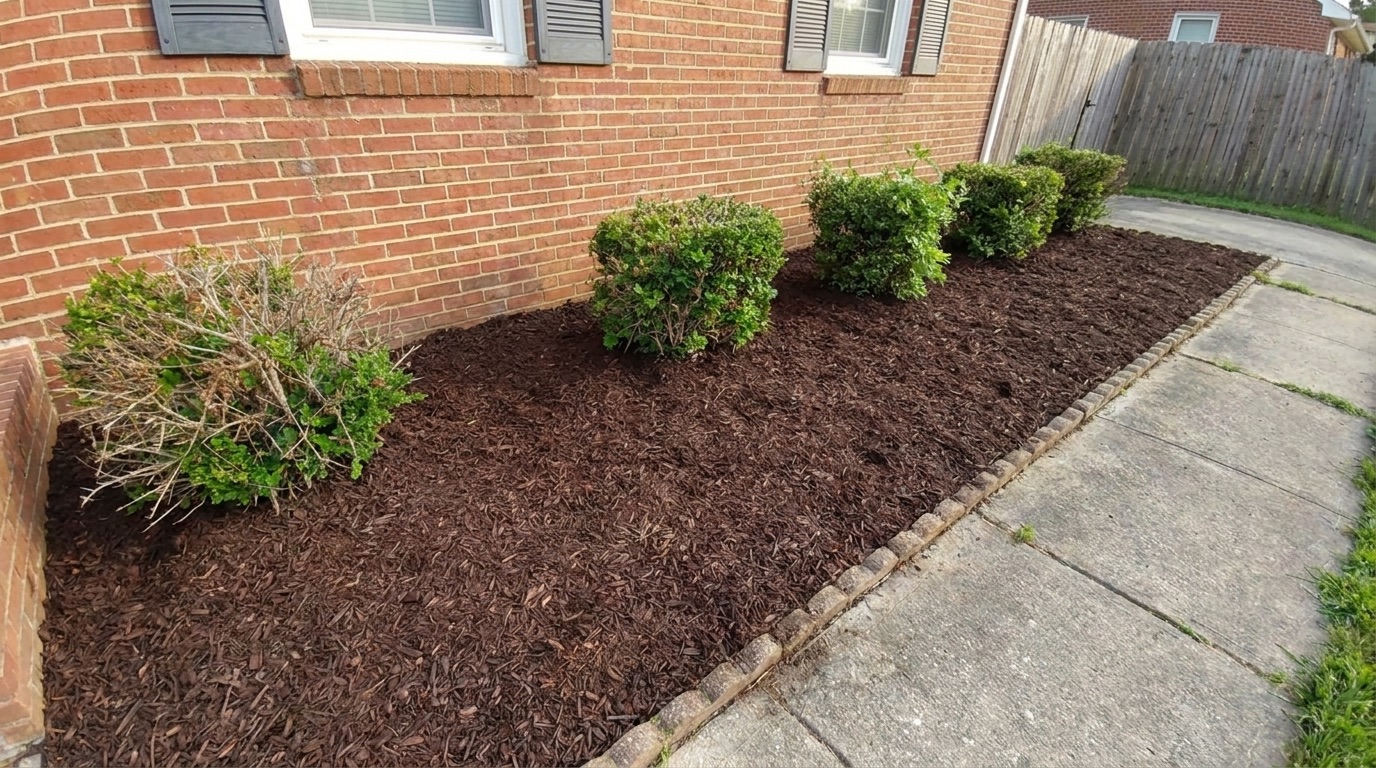
A fresh 2 to 3 inch layer of mulch over your garden beds is winter insulation for the root systems of your shrubs and perennials. It buffers the soil against the repeated freeze-thaw cycles that are common in the 540 area, cycles that can heave shallow-rooted plants right out of the ground. Mulch also holds moisture and suppresses the cold-season weeds that try to establish in bare soil. Keep mulch pulled back a couple of inches from the base of trunks and stems so it insulates the roots without trapping moisture against the bark.
8. Inspect Trees for Dead or Damaged Branches
Fall, once the leaves are down, is the best time of year to see a tree's true structure. With the canopy bare, dead limbs, cracked branch unions, and weak attachments are easy to spot. This inspection matters because winter is when trees get tested. Ice loading, heavy wet snow, and winter windstorms all put stress on weak branches, and a dead limb over your roof or driveway is a hazard waiting for the first storm. Catching and removing those branches now prevents the far more expensive problem of storm damage later.
When to DIY vs. When to Call a Pro
Plenty of this list is genuinely DIY. Raking a small yard, pulling dead annuals, and spreading mulch are all reasonable weekend jobs if you have the time and the physical ability. The trouble is that fall cleanup is not one task, it's eight, and they stack up during a narrow window when the weather is already turning.
The tasks worth handing off tend to be the ones where timing or technique changes the outcome. Overseeding has to hit that September to mid-October window or the whole effort is wasted, and it needs the right seed rate and soil contact to actually take. Fall fertilizer only works if it's the right product applied at the right time. Gutter cleaning and tree inspection both involve ladders and heights, which is where most homeowner injuries happen. And clearing the leaf volume off a property with mature hardwoods is a serious amount of physical labor that has to be repeated as the drop continues.
If you have a large lot, a lot of trees, or simply don't want to spend every fall weekend on it, a professional gets the whole checklist done in the right order and inside the right windows. That's the real value: not just the labor, but getting the timing right on the tasks that only work when they're done on schedule.
How to Schedule Fall Cleanup with Fresh-Cut
Fresh-Cut Landscaping handles the complete fall checklist across Stafford, Fredericksburg, Spotsylvania, and King George. Owner Alex runs every job personally, so the property gets one point of contact who knows the plan from leaves to mulch. Because the seeding and fertilizer windows are fixed by the calendar, the smart move is to get on the schedule early rather than calling once the leaves are already piling up and every landscaper in the 540 is booked.
A fall cleanup visit is built around your specific property. A wooded lot heavy with oaks needs a different plan than an open yard with a few maples. The estimate is free, on-site, and gives you a clear scope before any work begins.
Get Your Yard Winter-Ready
Alex handles every fall cleanup personally, from leaf removal to final mow to mulching the beds. Get on the schedule before the leaves start dropping and the windows close.
Get Your Free Estimate Today