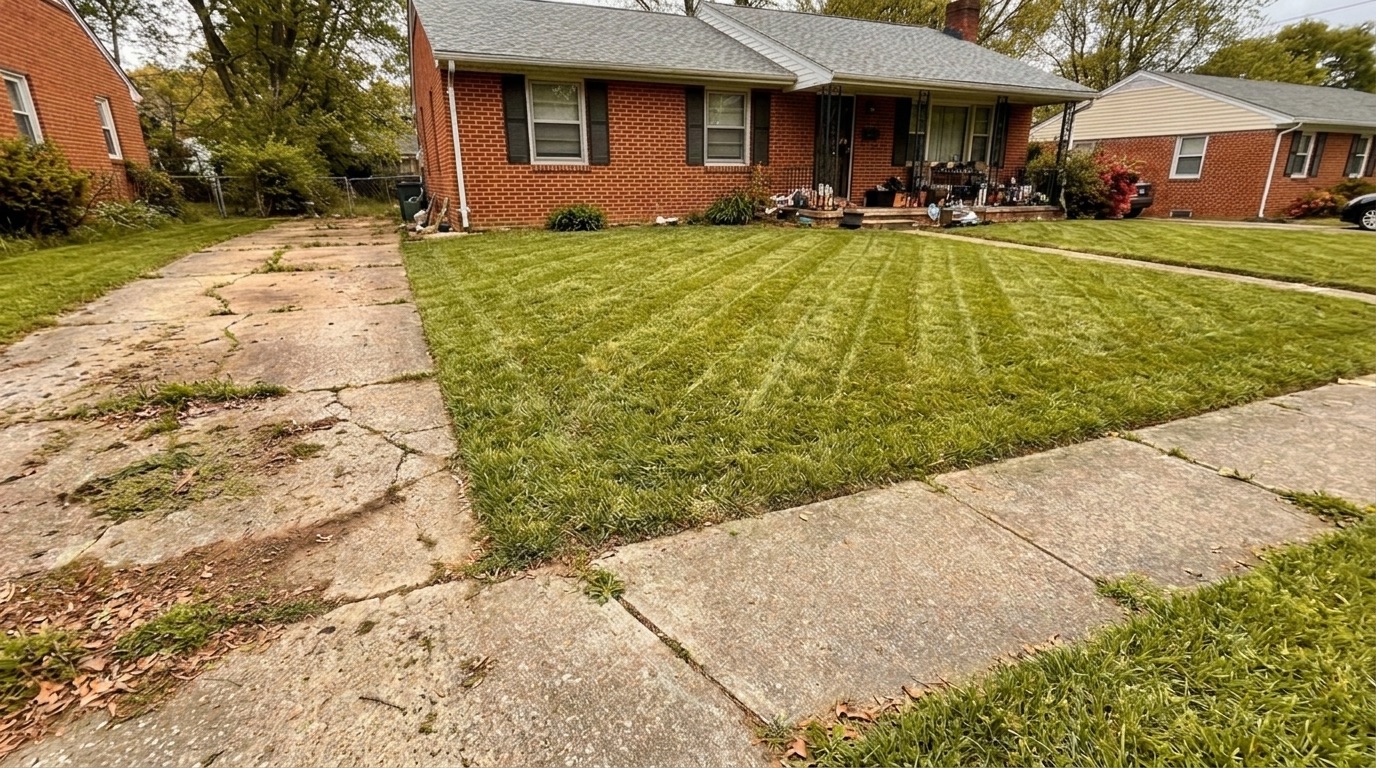
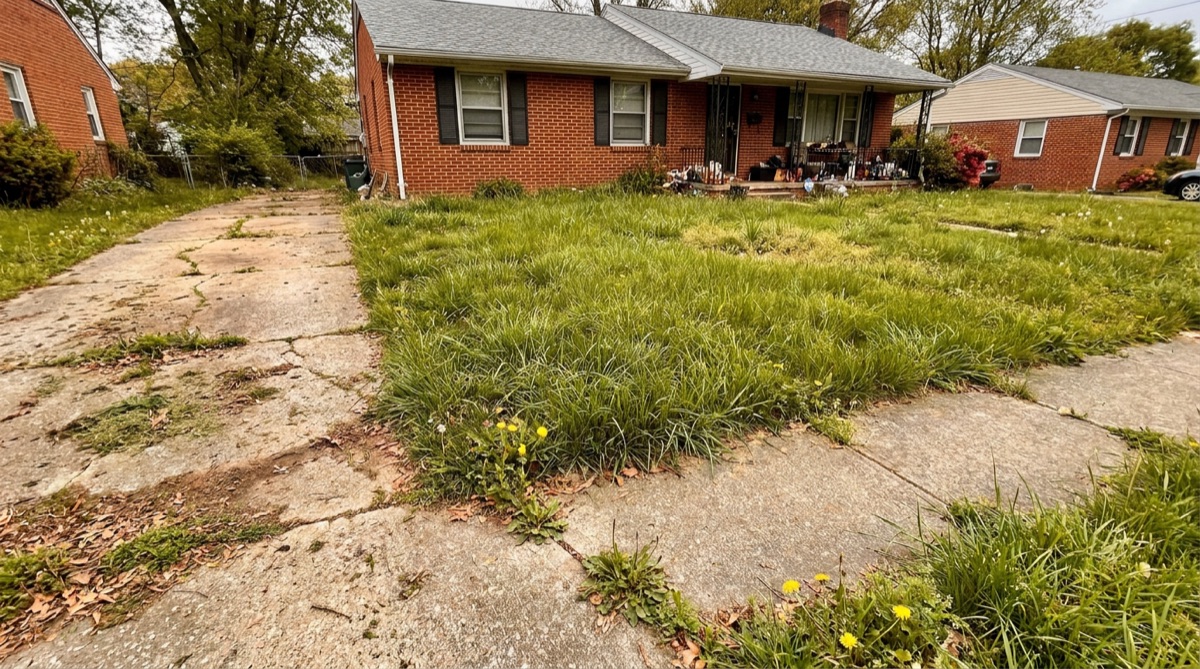
If your lawn in the 540 area looks thin no matter how much you fertilize, water, and mow, the problem usually is not the grass. It is the soil underneath it. Most yards in Stafford, Fredericksburg, and Spotsylvania sit on heavy clay that packs down hard over time. Water runs off instead of soaking in, roots stay shallow, and even the best Tall Fescue struggles to fill in.
Aeration is the fix. It is one of the highest-return things you can do for a Virginia lawn, and it costs a fraction of what people spend chasing green grass with fertilizer that never reaches the roots. This guide covers what aeration actually does, how to tell when your lawn needs it, the right season to do it in the Fredericksburg area, and what it costs.
What Is Lawn Aeration and Why Does It Matter?
Lawn aeration is the process of creating openings in the soil so air, water, and nutrients can reach the root zone. Over a growing season, soil gets pressed down by foot traffic, mowers, rain, and its own weight. Compacted soil squeezes out the air pockets that roots need, and it blocks water from moving down to where the grass can use it.
This matters more in Virginia than in a lot of the country because so much of the soil here is clay. Clay particles are tiny and pack together tightly, which means our lawns compact faster and hold that compaction longer than sandy soils do. Once clay is compacted, roots physically cannot push through it, so the grass stays shallow-rooted and weak.
The other problem aeration solves is thatch. Thatch is the spongy layer of dead stems and roots that builds up between the green grass and the soil surface. A thin layer is normal and healthy. When it gets thicker than about half an inch, it starts blocking water and nutrients the same way compacted soil does, and it becomes a nesting spot for pests and disease. Pulling cores through that layer breaks it up and helps it decompose.
When you relieve compaction and open up the thatch, roots respond fast. They grow deeper, the grass gets thicker, and the lawn becomes far more drought-tolerant. Deeper roots reach moisture during the dry stretches of a Virginia July, which is exactly when shallow-rooted lawns turn brown.
Signs Your Virginia Lawn Needs Aeration
You do not need a soil test to know your lawn is compacted. It tells you. Here are the signs to watch for around your property.
Water Pools or Runs Off
After a rain or a watering session, if you see puddles sitting on the lawn or water running down the driveway instead of soaking in, the soil is too compacted to absorb it. That runoff is water your grass never gets to use.
Thin, Patchy, or Struggling Grass
A lawn that thins out despite regular fertilizing and watering is a classic sign the roots cannot breathe. The nutrients are sitting on top of soil that will not let them through.
Hard Soil You Cannot Push a Screwdriver Into
Try the screwdriver test. Push a screwdriver into the lawn after a light watering. If it goes in easily, your soil is fine. If you have to lean on it, the soil is compacted and due for aeration.
Heavy Foot Traffic Areas
Paths where kids, pets, and mowers travel the same route pack down the hardest. If you can see worn strips across the yard, those zones are compacted well beyond the rest of the lawn.
Spongy Feel Underfoot
If the lawn feels soft and bouncy when you walk on it, that is usually a thick thatch layer. Peel back a small section of grass. If the brown spongy layer is thicker than half an inch, aeration will help break it down.
Poor Drainage After Storms
Virginia gets heavy summer thunderstorms. A healthy lawn drains within a few hours. If low spots stay soggy for a day or more, compacted clay underneath is trapping the water.
Not sure if your lawn needs aeration? Call Alex at 540-455-7405 for a free on-site look.
Call NowBest Time to Aerate in the 540 Area
Timing is the single biggest factor in whether aeration helps or wastes your money. In Virginia, our lawns are mostly cool-season grasses, and Tall Fescue is by far the most common. Cool-season grasses do their strongest root growth in fall, which makes fall the best time to aerate.
The prime window in the Fredericksburg area is September through October. The soil is still warm enough for fast root recovery, the air is cooling down, and the grass has a long stretch of good growing weather ahead before winter. Aerating in early fall also lines up perfectly with overseeding, since the seed drops right into the fresh holes and germinates in ideal conditions.
Spring, roughly March through April, is a workable secondary window if you missed the fall entirely. It is not as good, because spring aeration can open the soil right when crabgrass and other weeds are germinating, giving them an easy entry point. If you aerate in spring, hold off on any pre-emergent weed control decisions until you talk through the timing.
Avoid aerating in summer. The heat and drought stress of a Virginia July and August are the worst possible time to put stress on cool-season grass. Aerating a lawn that is already fighting to survive the heat can do real damage. Wait for fall.
Core Aeration vs. Spike Aeration
There are two main methods, and for Virginia clay the difference is not close.
Spike aeration pokes holes in the soil with solid tines or spikes. It does not remove anything. The problem is that on clay soil, pushing a spike in actually compresses the soil around the hole, which can make compaction slightly worse in the exact spot you are trying to fix. Spike aeration is fine for very light, sandy soil, but that is not what most of the 540 area has.
Core aeration, also called plug aeration, uses hollow tines to physically pull small plugs of soil out of the ground and drop them on the surface. This removes material instead of just displacing it, which genuinely relieves compaction and gives the surrounding soil room to loosen. Those open channels let air, water, and roots move freely.
For the clay soil that dominates Stafford, Fredericksburg, and Spotsylvania, core aeration is the only method worth doing. It is the standard any professional service should use, and it is the method that actually delivers the deeper roots and thicker turf you are paying for.
What to Do After Aerating
Aeration opens a window where your lawn is primed to improve fast, but only if you follow up in the next few days. Here is the sequence that gets the best results.
- Overseed immediately. The freshly pulled holes are perfect seed beds. Spreading Tall Fescue seed right after aerating drops it into direct soil contact, which is exactly what seed needs to germinate. This is why fall aeration and overseeding go together.
- Apply a starter fertilizer. A starter fertilizer high in phosphorus feeds new roots and helps seedlings establish. Put it down at the same time as the seed.
- Water consistently for two to three weeks. New seed needs steady moisture to germinate and take hold. Light, frequent watering that keeps the top inch of soil damp beats one heavy soak. Keep it up until the new grass is established.
- Leave the soil plugs on the lawn. Do not rake up the little cores. They look messy for a week or two, but they break down in the rain and return valuable soil and organic matter, along with microbes that help decompose thatch. Mowing after a couple of weeks helps break them up.
Skip the follow-up and you get most of the benefit of relieving compaction but miss the biggest win, which is thickening the lawn with new grass while the soil is open.
How Often Should You Aerate?
The right frequency depends on your soil and how hard your lawn gets used.
- Heavy clay soil, which is most of the 540 area, benefits from aeration once a year.
- Lighter or sandier soil holds up longer and usually only needs it every two to three years.
- High-traffic lawns with kids, pets, and regular gatherings compact faster and may need it more often, sometimes twice a year in the worst zones.
If you are not sure which category you fall into, the screwdriver test and how quickly your lawn drains after rain will tell you more than a calendar will. Most Virginia homeowners on clay do well with a yearly fall aeration paired with overseeding.
DIY vs. Professional Aeration
You can rent a core aerator from a local hardware or equipment store, usually for somewhere around 70 to 100 dollars for a half day. That can make sense for a small, flat, easy-to-reach yard. Before you commit to the rental, know what you are getting into.
Core aerators are heavy commercial machines, often 200 pounds or more. They are difficult to load into and out of a vehicle, awkward to maneuver, and a real workout to run across an average yard. On sloped or uneven ground, which describes a lot of properties in the 540 area, they get harder and less safe to handle. You also have to make two passes in different directions to pull enough plugs, which doubles the effort.
Professional service makes sense when the lawn is large, the ground is uneven or sloped, you want the job done in a single visit without hauling equipment, or you want aeration and overseeding handled together at the right time of year. A pro shows up with a commercial machine, does the passes correctly, and can seed and fertilize in the same visit so nothing gets missed.
Aeration Pricing in the Fredericksburg Area
Professional core aeration in the Fredericksburg and 540 area is one of the more affordable lawn services. Pricing usually runs based on the size of the lawn, and most residential jobs land somewhere in the range of a low flat fee for small yards up to a few hundred dollars for larger properties. As a rough guide, many quarter-acre and half-acre lawns fall in a comfortable middle range.
The factors that move the price are straightforward:
- Total square footage of the lawn.
- How sloped or uneven the terrain is, since difficult ground takes longer.
- Obstacles like beds, trees, and tight side yards that slow the machine down.
- Whether you add overseeding and starter fertilizer, which is the smart move in fall and adds to the cost but pays off in a thicker lawn.
Because prices vary with lot size and terrain, the only way to get an accurate number is an on-site look. At Fresh-Cut Landscaping, owner Alex measures the lawn, checks the soil, and gives you a straight quote with no pressure. If fall overseeding makes sense for your yard, he will bundle it so the job gets done at the right time.
Get a Free Aeration Quote
Fall is the window for aeration and overseeding in the 540 area. Alex handles every job personally. Call now to get on the schedule before the season fills up.
Get Your Free Estimate Today